Mythos and Fable: When Digital Sovereignty Depends on a Switch
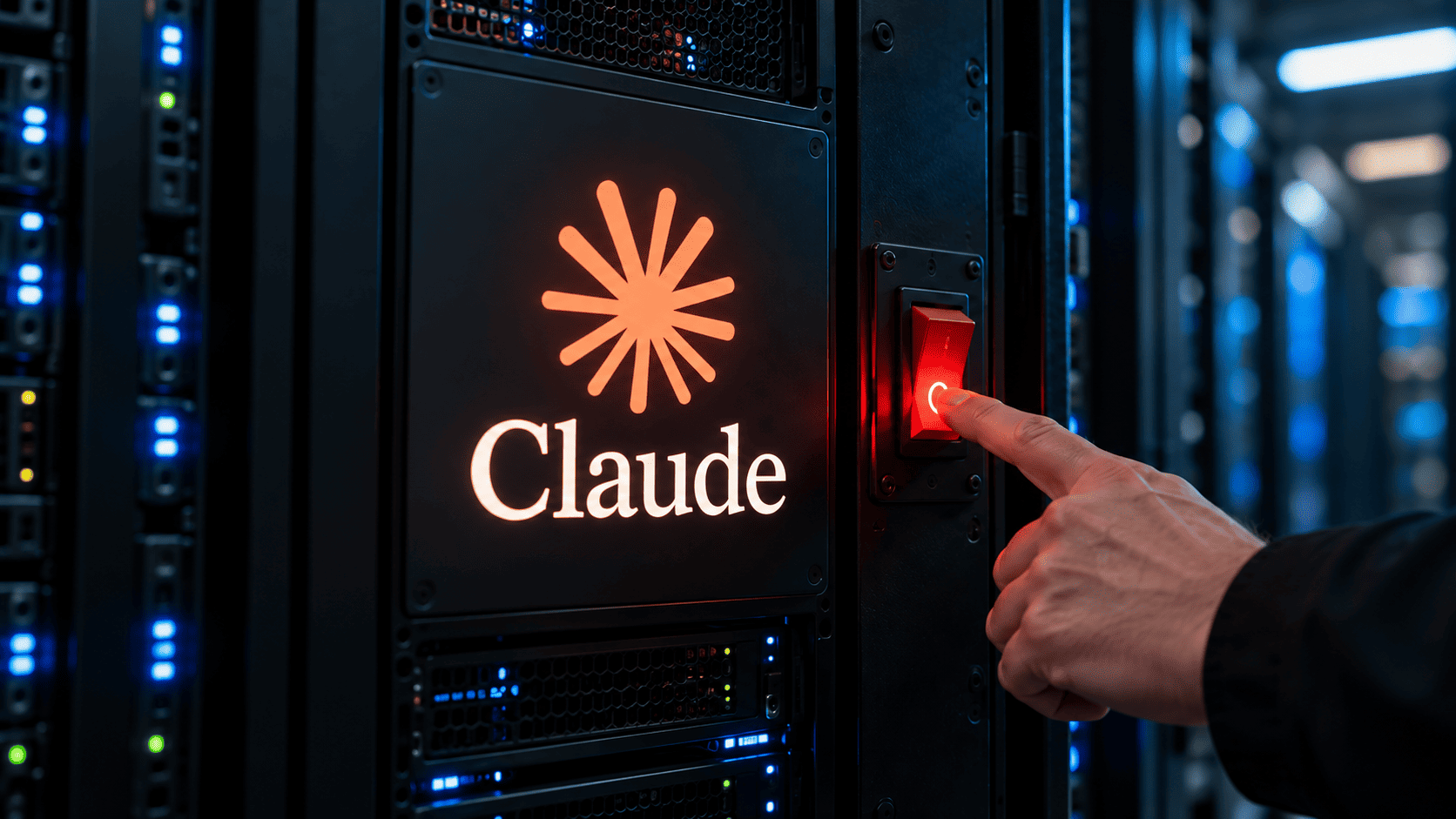
On June 12, 2026, Anthropic was forced to globally suspend access to the Fable 5 and Mythos 5 models following a directive from the U.S. government. The service was later reactivated, but the incident clearly highlighted a problem: who really controls a technology used through the cloud?
It didn't take a breakdown.
No data center went down and no infrastructure had to be compromised.
The June 12, 2026 Anthropic said it had received a directive from the United States government based on national security grounds to cease access to Claude Fable 5 and Claude Mythos 5 by foreign citizens, even when they were outside the United States.
To comply with the order, the company said it was forced to temporarily disable the two models for all customers.
The service would then become available again.
But the episode made concrete a concept often discussed in much more abstract terms: the digital sovereignty.
What are Mythos and Fable?
Anthropic had presented Fable 5 and Mythos 5 on June 9, 2026.
The two services use the same basic model, but with different levels of protection.
Fable 5 was designed for more general use through specific security systems, while Mythos 5 was initially intended for a small number of cybersecurity professionals within Project Glasswing.
The project had been born a few months earlier precisely to use particularly advanced AI models to search for software vulnerabilities.
According to Anthropic, in the early stages of Project Glasswing Mythos Preview had analyzed over 1,000 open source projects and identified thousands of potential vulnerabilities. After testing some of the results, a significant portion were found to be valid.
A useful skill for those who have to defend a system, but potentially also relevant on the offensive front.
Why the US government asked for it to be stopped
According to the reconstruction published by Anthropic, the US decision would have come after the reporting of a technique capable of bypassing some of the protections of Fable 5.
The system was able to identify some software vulnerabilities and, in one case, produce demonstration code for their exploitation.
Anthropic later disputed that the episode demonstrated access to particularly advanced capabilities.
In its own tests, the company says that other publicly available models were also able to detect the same vulnerabilities and produce a similar demonstration.
The company has however modified its security systems and introduced a new classifier designed to block that specific technique in more than 99% of test cases.
The July 2, 2026, Anthropic announced that Fable 5 was once again available globally.
The point, then, is not that Fable is still off.
It is that it was possible to turn it off.
Digital sovereignty also means being able to continue using a technology
The European Commission defines the technological sovereignty such as Europe's ability to act autonomously in the digital world, developing and mastering key technologies, data, and infrastructure, and reducing dependence on third-country suppliers.
The Fable case shows one reason why this definition matters.
When software is installed on its systems, the organization retains at least some control over its execution.
With many cloud services and proprietary AI models, the relationship changes.
The customer accesses a function that continues to live in the provider's infrastructure.
This means that availability and access conditions may depend on:
- provider decisions;
- contractual changes;
- regulatory changes;
- geographical limitations;
- sanctions and export control;
- decisions of the authorities of the country in which the supplier operates.
The software continues to function as long as the right to access it exists.
The problem is not just about artificial intelligence
AI makes this dependency particularly evident, but the principle concerns a much broader part of the enterprise digital infrastructure.
The same reasoning can be applied to:
- cloud services;
- SaaS platforms;
- CRM;
- email systems;
- collaboration tools;
- API;
- management software;
- authentication services;
- data and backup infrastructure.
The more a business process depends on an external platform, the more important it becomes to know what would happen if that platform suddenly became unavailable.
Not necessarily forever.
Even a temporary interruption can be enough to block a critical process.
European technological dependence is already an institutional issue
The issue has entered directly into European policies.
The June 3, 2026, A few days before the Fable case, the European Commission presented a package dedicated to technological sovereignty.
The strategy includes interventions in semiconductors, cloud, artificial intelligence and open source software.
According to the Commission, the European Union depends on third countries for more than 80% of the world's leading digital products, services, infrastructure, and intellectual property.
The issue is therefore not presented only as an industrial theme.
It's also a question of resilience.
When a strategic function is entirely dependent on technologies controlled outside its own perimeter, even a decision made in another jurisdiction can have immediate operational effects.
Open source does not automatically mean sovereignty
One possible answer is to use open technologies.
But even here a distinction is necessary.
Having access to a model’s code or weights can increase the ability to execute, control, and transfer a technology.
However, this does not automatically mean being autonomous.
To use an advanced model internally you also need:
- computing infrastructure;
- technical skills;
- security systems;
- updates;
- monitoring;
- maintenance capacity;
- data availability.
Digital sovereignty therefore does not simply coincide with “using open source”.
Above all, it means avoiding that a critical function depends on a single point of control over which the organization has no alternative.
The real problem for companies is operational lock-in
For an SME, the most concrete point is this.
The company can entrust an important function to a specific service and progressively build processes, automations, and data around that platform.
Changing it is becoming increasingly difficult.
It is the so-called vendor lock-in: a situation in which switching to another supplier involves costs, time, or technical difficulties that are sufficiently high to limit freedom of choice.
It's not necessarily a mistake.
Many proprietary services offer important advantages.
The problem arises when lock-in was not assessed before the platform became essential.
Before integrating an AI service, you need an exit strategy
The growth of AI agents makes this assessment even more important.
A model can be linked to:
- company documents;
- CRM;
- e-commerce;
- management systems;
- customer care;
- administrative flows;
- internal automations.
At that point it's no longer just “a chatbot.”.
Become a component of the infrastructure.
Before building a critical process around a single provider, it would therefore be useful to know:
- Can the data be exported?
- Can the APIs be replaced without rebuilding the entire system?
- Is there a compatible alternative model?
- What happens if the service is suspended?
- Which parts of the infrastructure remain under the company's control?
These are architectural questions before they are commercial ones.
What this means for your business
The Mythos and Fable case does not suggest that companies should abandon American cloud services or platforms.
He suggests something more practical: know your addictions.
For truly critical services it is advisable to:
- identify the suppliers on which operations depend;
- avoid integrations that are impossible to replace;
- keep data and documents exportable;
- provide alternatives for the most important functions;
- evaluate open or internally installable solutions when they make sense;
- design integrations that separate the business process from the single supplier.
Digital sovereignty, for an SME, does not mean building your own cloud or AI model.
It means being able to change technology without losing control of the process.
It's a less theoretical difference than it seems.
On June 12, 2026, a global technology service showed that access to a feature can depend on a decision made far away from the company using it.
DigiFe develops AI solutions for business by integrating them into business processes and also evaluating data, infrastructure, and technology dependencies, so that automation is useful without making a single vendor the sole point of dependency for the system.