Google Ads and SEO Together: How to Build a System That Generates Traffic and Customers
In the current digital landscape, many companies continue to ask themselves a question that, in fact, limits their growth opportunities: is it better to invest in SEO or in Google Ads?
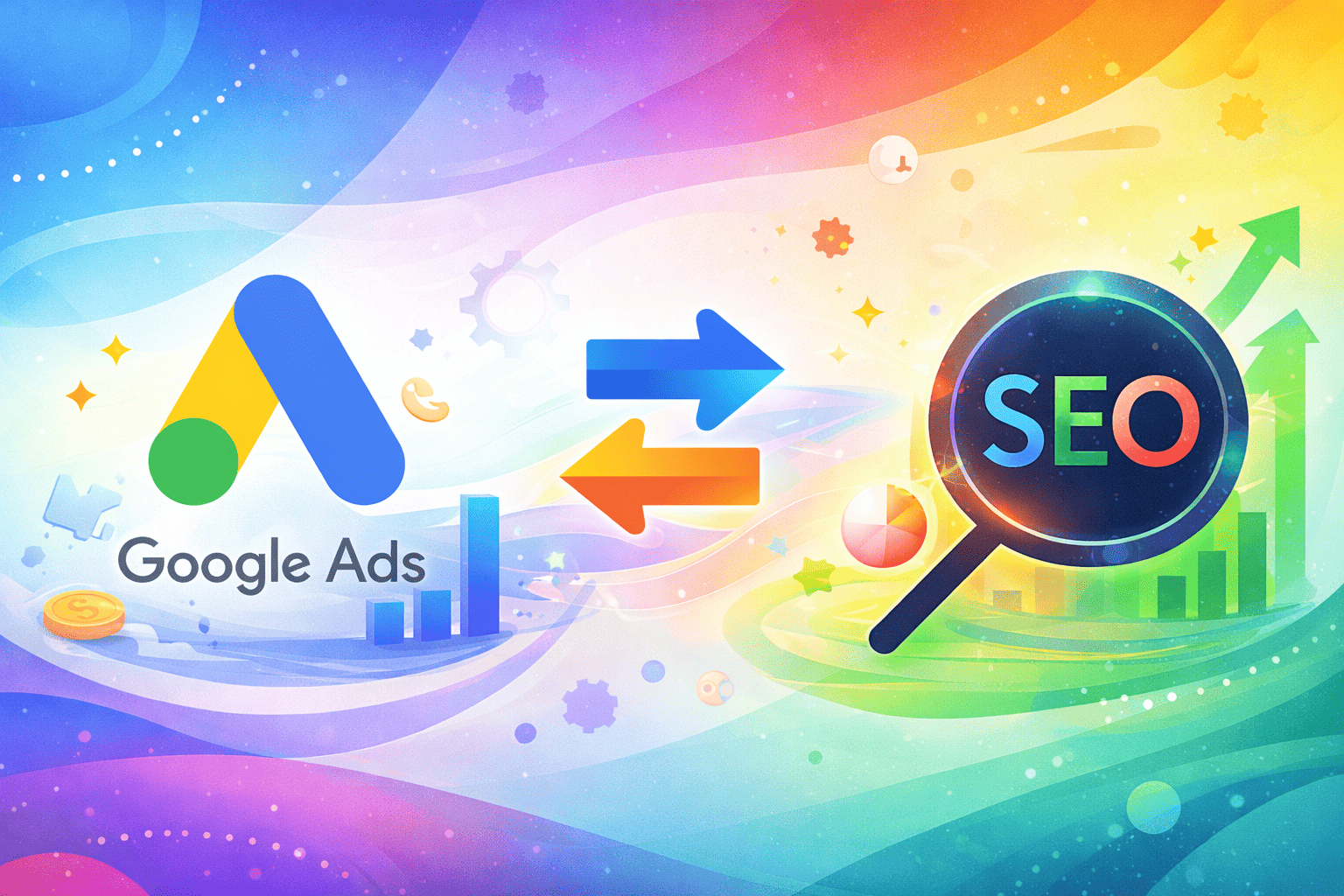
This is an incorrect setting. SEO and Google Ads they are not alternative tools, but complementary components of a single strategic digital marketing system. Considering them separately means giving up a significant part of their potential.
An effective strategy is not based on the choice of a channel, but on the ability to integrate them coherently, transforming the traffic in concrete and measurable opportunities.
Why Separate SEO and Google Ads Don't Really Work
One of the most common mistakes in digital marketing strategies it is the absence of an integrated vision. When SEO and Google Ads are managed independently, creating fragmentation that limits overall performance.
There SEO works in the medium-long term, building organic visibility and authority over time. Google Ads, on the contrary, allows you to obtain immediate results, but often without real continuity if not supported by a solid structure.
In this scenario:
- the data is not shared
- the decisions are not coordinated
- the marketing budget is wasted
According to Google's official guidelines on
SEO, An effective strategy must be based on quality content and continuous optimization, elements that require consistency across channels and shared data.
Furthermore, it is important to clarify a fundamental aspect: traffic and results are not synonymous.
A high number of visits doesn't guarantee conversions. Without a clear strategy, traffic risks remaining an end in itself, devoid of real business value.
SEO: Building an Asset Over Time
There SEO represents a structural investment. It does not produce immediate results, but it allows you to build a stable and long-lasting digital asset.
A well-positioned site on search engines:
- generates constant organic traffic
- reduces dependence on advertising
- strengthens the brand credibility
Google highlights the importance of useful and relevant content in the guide to
creating quality content.
However, it is not enough to gain visibility. It is necessary to intercept users who are genuinely interested, in line with company objectives.
This implies strategic work on keyword, based on:
- search intent
- conversion funnel
- real user needs
Informational keywords have a different value than those with commercial intent. An effective SEO strategy takes these differences into account and builds targeted content for each stage of the decision-making process.
Google Ads: Accelerate Results and Test the Market
Google Ads allows you to obtain immediate visibility and quickly generate qualified traffic. It's a fundamental tool for short-term contact acquisition and for validating offers, services, and positioning.
According to the official guide to
Google Ads, campaigns allow you to intercept users at the exact moment they are looking for a product or service.
Its value, however, isn't limited to lead generation. Google Ads is also a powerful analytics tool.
Through the campaigns it is possible to understand:
- which keywords convert
- which bring unqualified traffic
- which messages are most effective
It's about concrete data, based on real user behavior, which allow for informed decisions to be made.
If used in isolation, Google Ads risks becoming an ongoing cost. If integrated into a broader strategy, it becomes a growth accelerator.
The real point: data integration
The crucial step is to integrate the data coming from SEO and Google Ads, transforming them into a tool of continuous optimization.
Keywords that perform well organically can be amplified through paid campaigns. At the same time, the information gathered through Google Ads helps guide SEO content production, improving the relevance and effectiveness of pages.
As highlighted by
Think with Google, the use of data is central to the most effective digital strategies.
This integration allows us to move beyond a hypothesis-based approach, replacing it with a model based on real and measurable data.
The Digife system: traffic, data, optimization and conversion
An effective approach requires a structured method. The model adopted by Digife is based on a clear operational flow, divided into four phases.
1. Traffic
Coordinated activation of SEO and Google Ads to intercept qualified users.
2. Data
Monitoring of:
- user behavior
- conversions
- performance keywords
3. Optimization
Targeted interventions on:
- Ads campaigns
- SEO content
- Site UX
4. Conversion
Traffic transformation into:
- contacts
- requests
- customers
This process allows you to build a dynamic system, constantly evolving, capable of adapting to data and improving over time.
In today's digital landscape, simply having an online presence is no longer enough. It's necessary to adopt a strategic approach that transforms your digital presence into a growth tool.
SEO and Google Ads, when used separately, generate traffic. When integrated into a coherent system, they become fundamental levers for business development.
The difference is not in the tools, but in how they are used.
You don't have to choose between SEO and Google Ads.
Contact us to build a system in which both work in an integrated way, with the aim of generating concrete and measurable results.